A lot of Oklahoma RV owners park their rigs from late fall until the weather turns nice again in spring. Our winters aren't as long as up north, but they're hard on campers in their own way: sudden hard freezes, ice storms, strong wind and wide temperature swings from day to day. A camper that's put away carelessly can come out in spring with cracked water lines, a dead battery, a mouse problem and a roof leak.
Most of that is preventable. Here's the checklist we recommend before you park your RV or travel trailer for the winter.
1. Take care of the water system first
Water is the biggest risk. If water freezes in a line, a fitting, a faucet or the water heater, it expands and can crack whatever it's in. You often won't know until spring, when you turn the water on and find a leak under the floor.
- Dump and rinse the black and gray tanks.
- Drain the fresh water tank.
- Drain the water heater (with the heater turned off and cooled down first).
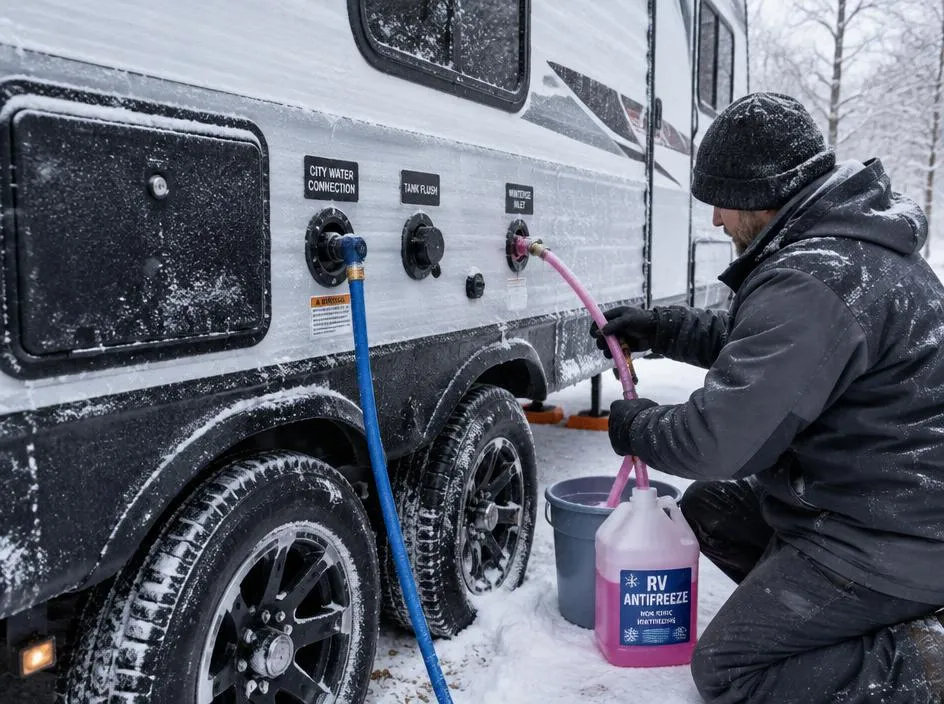
- Winterize the lines, either by blowing them out with air or by using RV antifreeze, the pink, non-toxic kind made for drinking water systems. Never use automotive antifreeze.
- Don't forget the low point drains, the outside shower, the ice maker and the washing machine if you have them.
If you're not sure you got every line, it's worth having it done. Winterizing is quick compared to repairing a frozen line inside a wall.
2. Look after the batteries
Batteries slowly discharge in storage, and a discharged battery can freeze and be ruined in the cold.
- Fully charge the batteries before storage.
- Turn off the battery disconnect, or disconnect the negative cable, so small loads don't drain it.
- If the RV is plugged in, a good converter or a battery maintainer can keep it charged. If it's not, bring the batteries somewhere you can charge them once a month or so.
3. Shut down the propane
- Turn the propane off at the tank.
- Make sure every appliance is off.
- If you remove portable tanks, store them outside in an upright position, never inside a garage or shed.
4. Protect the tires
Tires age from sun, weather and sitting in one spot.
- Inflate them to the recommended pressure.
- Use wheel chocks.
- Cover them to block the sun.
- If possible, park on a solid surface instead of dirt or grass, which holds moisture against the tires.
5. Check the roof and seals before you walk away
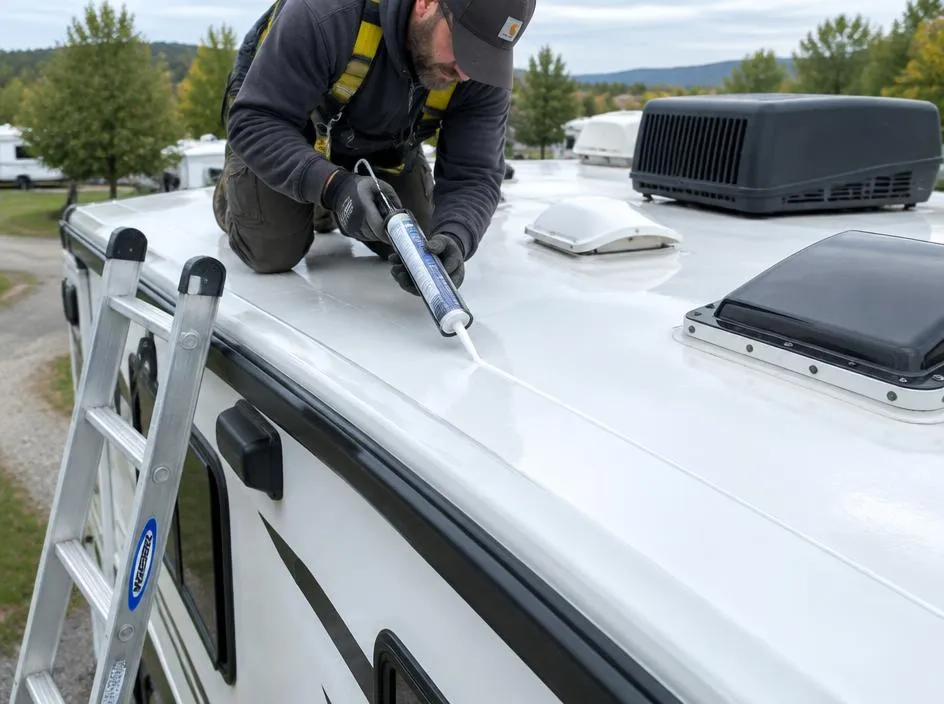
Winter storms, wind and freeze-thaw cycles find any weak spot in your roof. A small crack in the sealant around a vent or the roof edge can let water in all winter long, and you won't see the damage until it's a soft spot in the ceiling.
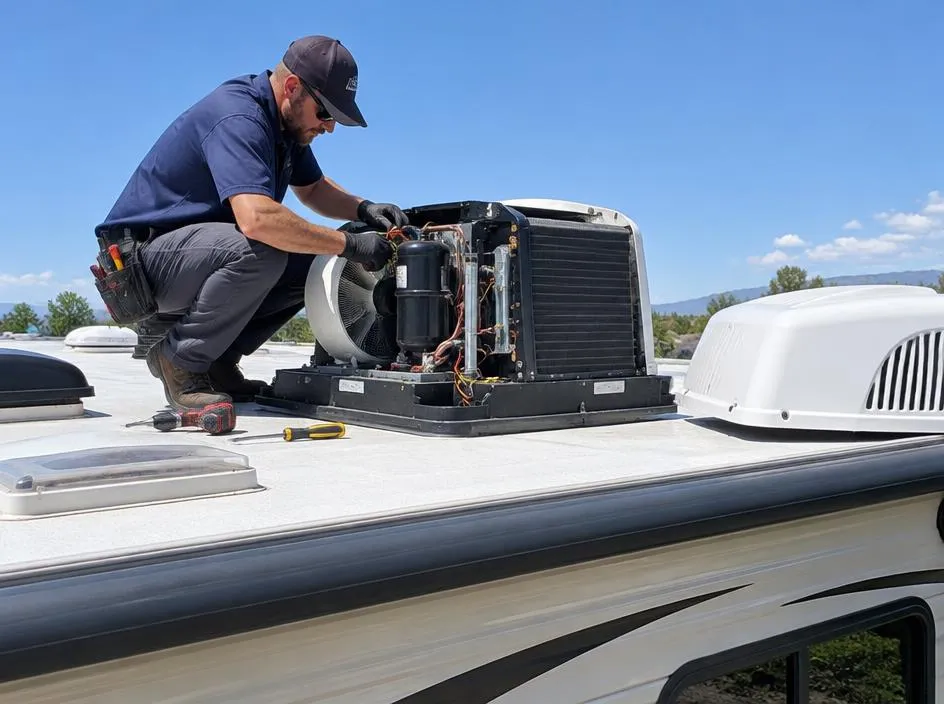
- Look over the roof sealant around vents, skylights, the A/C and the edges.
- Check the window and door seals.
- Clean off leaves and branches.
- If anything looks cracked, peeling or lifted, get it resealed before storage.
6. Keep pests out
Mice love a quiet, parked RV. They chew wiring, insulation and anything they can nest in.
- Remove all food, including sealed packages.
- Clean crumbs and spills.
- Look under the RV for gaps around pipes and wires and seal them.
- Check traps regularly over the winter.
7. Prep the inside
- Prop the fridge and freezer doors open after cleaning them, to prevent mold and odors.
- Leave cabinet doors slightly open for air flow.
- Close the blinds to cut down on sun damage.
- Use moisture absorbers to fight condensation.
8. Choose the right cover, or none
A breathable RV cover can protect against sun and debris. A non-breathable tarp traps moisture and can cause more harm than good. In strong Oklahoma wind, a loose cover can also rub and scratch the finish, so if you use one, make sure it fits well and is secured.
Quick storage checklist
| Area | Before storage |
|---|---|
| Water | Tanks dumped, lines winterized, water heater drained |
| Batteries | Charged, disconnected or maintained |
| Propane | Off at the tank, appliances off |
| Tires | Inflated, chocked, covered |
| Roof & seals | Inspected, cracks resealed |
| Pests | Food out, gaps sealed, traps set |
| Inside | Fridge propped open, blinds closed, moisture absorbers |
Check on it during the winter
Storage isn't set and forget. Every few weeks, especially after a storm or a hard freeze, take a quick walk around the RV. Look for water stains, signs of pests, a sagging cover or damage from wind. Catching a problem in January is a lot cheaper than finding it in April.
Getting it ready again in spring
When the weather warms up, de-winterize the water system, check for leaks as the water goes back on, test the batteries, inspect the roof again and run every appliance before your first trip.
Want help getting your RV ready for storage, or need something checked before you park it? Call Frederick at (405) 429-9795. Labor is $85 an hour, and parts are billed at what they cost.
Questions
Quick answers
Many owners do, and it can keep the batteries charged. The water system still needs to be winterized, and you should still check on the RV regularly.
Related services