If you live in Oklahoma, you know how fast a storm can roll in. Hail can come down hard for a few minutes and be gone, and many RVs sit outside in driveways and storage lots with no cover over them. The damage isn't always obvious from the ground, but a cracked vent cover or a small puncture in the roof can let water in with the next rain.
Here's how to check your RV after a hailstorm, what to look for, and what to do if you find damage.
Why hail damage matters so much on an RV
An RV roof is not built like a house roof. Most are a thin membrane (rubber or a similar material), fiberglass or aluminum over a wood or composite structure. Once water gets past the outer layer, it can spread into the ceiling and walls without showing much on the inside for a while. By the time you see a stain or feel a soft spot, the wood underneath may already be damaged.
That's why the goal after a hailstorm is simple: find any opening before water does.
What hail usually damages
- Roof vent covers and skylights. These are often plastic and can crack or shatter.
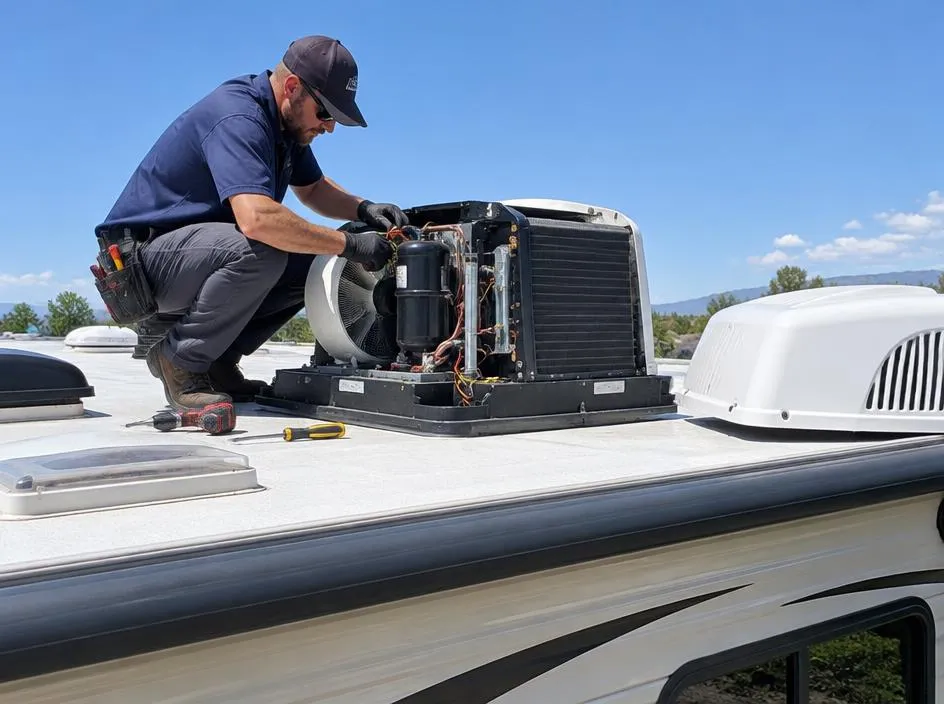
- A/C shrouds. The plastic cover on a rooftop A/C can crack, which exposes the unit.
- The roof membrane itself. Large hail can puncture or tear a rubber roof.
- Fiberglass roofs and front caps. Look for cracks or spiderweb marks.
- Aluminum siding and roofs. Dents are common; dents alone may be cosmetic, but check for anything torn.
- Solar panels, antennas, satellite domes and awnings.
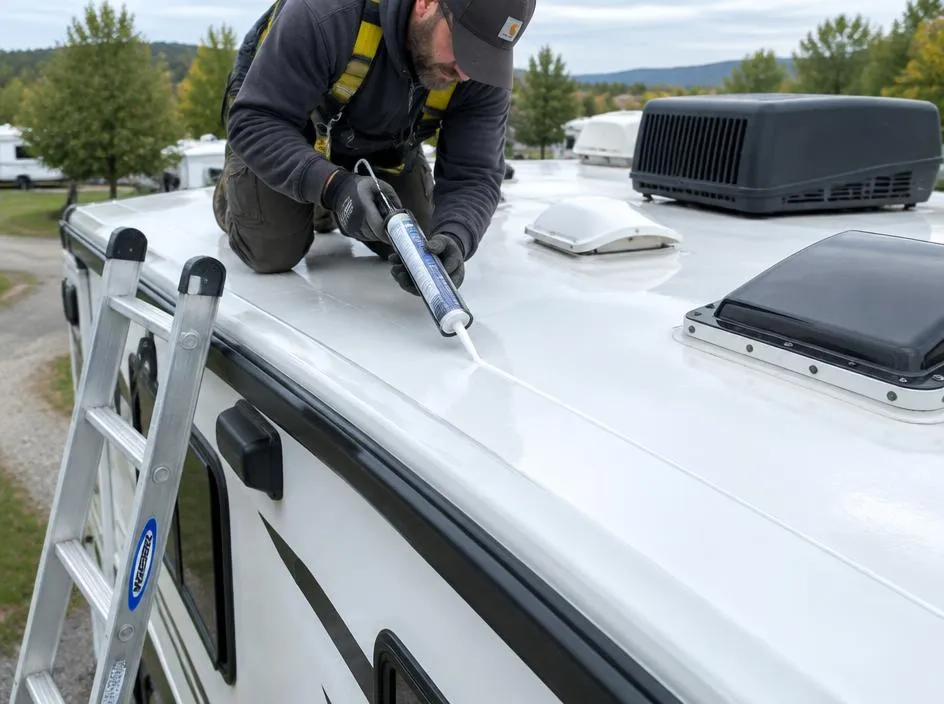
- Sealant. Impacts can crack old, dried sealant around edges and fixtures.
How to check safely
Safety comes first. Many RV roofs aren't meant to be walked on, and a wet roof is slick.
- 1Wait until the storm has passed and the roof is dry.
- 2Start from the ground. Walk around the RV and look for broken pieces of plastic around it, cracked side windows, dents or damaged awning fabric.
- 3Use a sturdy ladder to look at the roof from the edge. Often you can see most of it without stepping on it.
- 4Only walk on the roof if your owner's manual says it's walkable, and stay on the supported areas.
- 5Take clear photos of everything you see, both close up and from a distance.
- 6Go inside and look at the ceiling around vents, skylights and the A/C. Look for drips, stains or light coming through.
If you're not comfortable on a ladder or on the roof, don't push it. A fall does far more damage than any hail.
What to do if you find damage
- Cover openings right away. If a vent cover is broken or there's a puncture, cover it to keep rain out until it's repaired. A tarp held down well, or a temporary patch, is better than nothing, but it's only temporary.
- Document it. Photos with dates help if you plan to talk to your insurance company. Check your policy for what's covered.
- Don't wait for the next rain. Even a small crack can let water in during the next storm.
- Get a proper repair. Broken vent covers and A/C shrouds should be replaced, punctures patched correctly, and cracked sealant redone.
Hail damage at a glance
| Part | What to look for | Risk if ignored |
|---|---|---|
| Vent covers / skylights | Cracks, missing pieces | Direct water entry |
| A/C shroud | Cracks, holes | Damage to the A/C unit |
| Roof membrane | Punctures, tears | Leaks into ceiling and walls |
| Sealant | Cracked, lifted edges | Slow leaks over time |
| Fiberglass cap | Cracks | Water behind the cap |
Signs of a leak you might have missed
Some damage only shows up later. Keep an eye out over the next few weeks for: - Stains or discoloration on the ceiling or walls - A musty smell - Soft spots in the ceiling, walls or floor - Wallpaper or paneling that starts bubbling or peeling
If you notice any of these, have the roof checked even if you didn't see damage after the storm.
How Frederick handles roof repairs
Frederick checks the roof and the area around any damage, then shows you what he found and what it'll take to fix it. You get the options and the price before any work, and parts are billed at what they cost with no markup. Bigger structural repairs need a 25–50% deposit up front.
Hail hit your RV, or found a leak you can't explain? Call Frederick at (405) 429-9795 or send a request.
Questions
Quick answers
Dents alone may be cosmetic, but check the area for any tears or cracked sealant, which can let water in.
Related services