You turn on the hot water in your RV and get hit with a smell like rotten eggs. The cold water smells fine. It's only the hot water. It's unpleasant, but it's also very common, and it doesn't usually mean anything is broken.
Here's what causes it and what you can do about it.
Why it happens
The rotten egg smell comes from hydrogen sulfide gas. In an RV water heater, it's usually created by bacteria that live in the water. Warm water that sits in the tank gives those bacteria a comfortable place to grow, especially when the RV isn't used for a while.
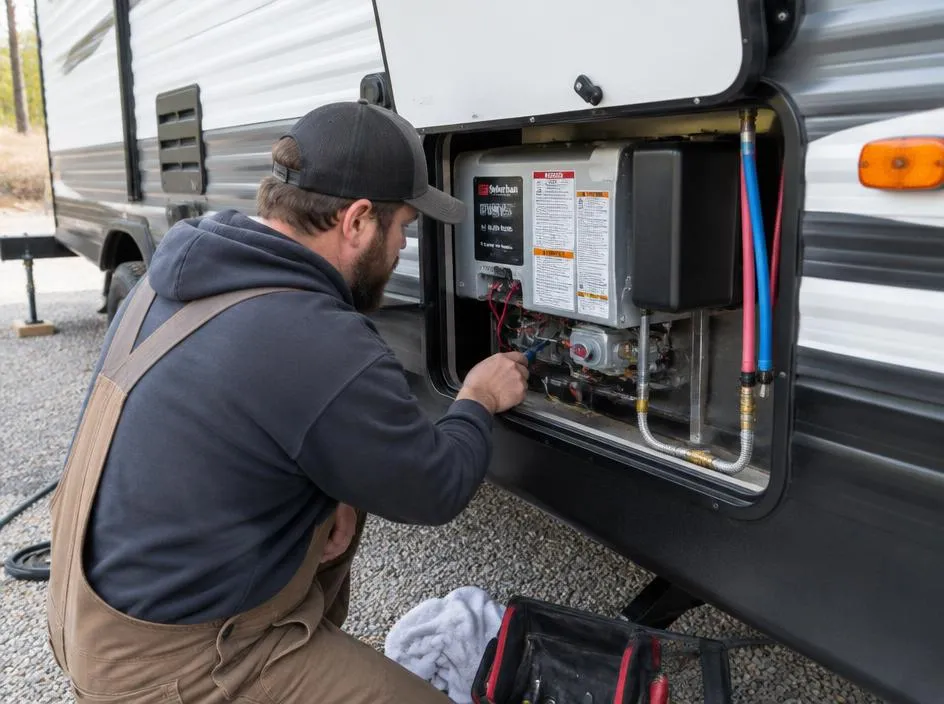
In many RV water heaters with steel tanks, there's also an anode rod, a metal rod that protects the tank from corrosion. In some water, the bacteria react with the anode rod and make the smell stronger. Other water heaters use aluminum tanks that don't have a removable anode rod, so it helps to know which type you have. Your owner's manual or the label on the water heater will tell you.
Your water source matters too. Some campground and well water carries more sulfur or more bacteria, which is why the smell can show up after a trip even if it wasn't there before.
Signs it's the water heater and not your water supply
- Only the hot water smells.
- The cold water is fine.
- The smell is stronger after the RV sits unused for a while.
If both hot and cold water smell, the problem is more likely your water source or the fresh water tank.
How to get rid of the smell
1. Drain and flush the water heater
Draining and flushing removes stale water and sediment where bacteria live.
- Turn off the water heater (both gas and electric) and let the water cool completely.
- Turn off the water pump and disconnect city water.
- Open a hot water faucet to relieve pressure.
- Remove the drain plug or anode rod and let the tank drain.
- Flush the tank with clean water until it runs clear.
Never turn on the water heater when the tank is empty. Running it dry can ruin the heating element or damage the tank.
2. Sanitize the water system
Sanitizing kills the bacteria causing the smell. Most RV manufacturers recommend a mild bleach solution run through the fresh water system and left to sit for a set time, then flushed out completely. Follow your owner's manual for the right amounts and times.
3. Check or replace the anode rod
If your water heater has an anode rod and it's badly worn or the smell keeps coming back, replacing it can help. Some owners switch to a different type of anode rod to reduce the smell. If you're not sure what your water heater needs, ask before buying one.
4. Use your RV regularly or drain it during storage
Water that sits warm for weeks is the main problem. If you won't be using the RV for a while, drain the water heater.
Quick troubleshooting table
| What you notice | Likely cause | Next step |
|---|---|---|
| Only hot water smells | Bacteria in the water heater | Drain, flush, sanitize |
| Both hot and cold smell | Water source or fresh tank | Sanitize system, check source |
| Smell keeps coming back | Anode rod or stubborn bacteria | Check or replace the anode rod |
| Water looks rusty | Corrosion in the tank | Have the tank checked |
When to call for help
Call when: - The smell keeps coming back after flushing and sanitizing - You find a leak around the water heater - The water is rusty or discolored - The anode rod is stuck or you're not sure what type you need - The water heater isn't heating properly on gas or electric
A water heater problem is often simple, but it's easy to make it worse by stripping a drain plug or running the heater dry. Frederick can drain, flush and check your water heater, tell you whether any parts need replacing and give you the price first. Parts are billed at what they cost, with no markup.
Hot water smell won't go away? Call Frederick at (405) 429-9795 or send a request.
Questions
Quick answers
At the levels usually found in RV hot water it's mostly a nuisance, but it means bacteria are growing, so it's worth cleaning out.
Related services